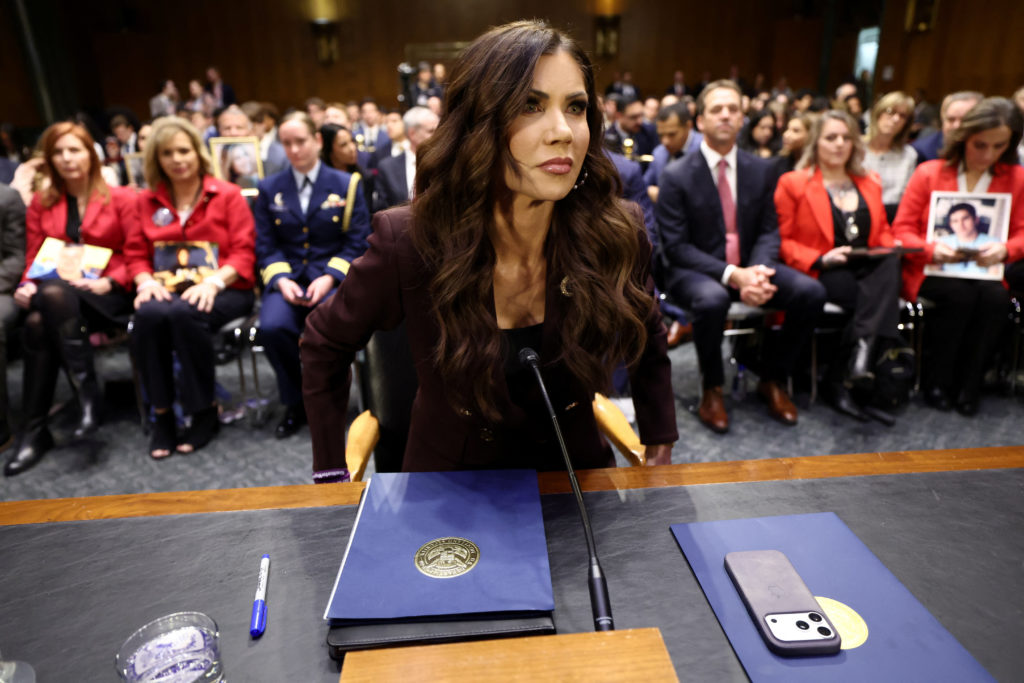
Kristi Noem's RNC Speech: Architecting Trump's Constitutional Defense
In the vibrant, often tumultuous theater of American politics, speeches delivered at the Republican National Convention serve as more than just celebratory moments; they are carefully constructed platforms designed to shape narratives, rally the base, and articulate a clear vision for the party's future. South Dakota Governor Kristi Noem’s address at a recent RNC was a prime example of this strategic communication, placing a strong emphasis on former President Donald Trump’s perceived devotion to the Constitution. Her speech aimed to solidify a crucial defense for Trump, positioning him as a staunch defender of America’s founding principles, while notably sidestepping any mention of the serious accusations of subverting those very principles.
This nuanced approach to political rhetoric highlights Noem's strategic acumen and her pivotal role within the conservative movement. Her words were not merely an endorsement but an ideological framing, attempting to redefine the former President's legacy through the lens of constitutional fidelity. This article delves into the layers of Noem's RNC address, exploring its implications for Trump, the Republican Party, and the ongoing national conversation around constitutionalism and accountability.
The RNC Platform: Crafting a Narrative of Constitutional Allegiance
The Republican National Convention is a critical moment for the party to present a unified front and articulate its core values to a national and international audience. Kristi Noem, a rising star within the GOP, used her slot to deliver a powerful message centered on constitutionalism. By portraying Donald Trump as a fervent defender of the Constitution, Noem aimed to counteract prevailing narratives and reinforce a specific image of the former President among the Republican faithful. Her speech resonated with themes of limited government, individual liberties, and judicial restraint—principles deeply cherished by the conservative base.
Noem's rhetoric painted a picture of a leader who respects the foundational document above all else, often alluding to Trump's judicial appointments and his executive actions as proof of this unwavering commitment. This framing is essential for energizing conservative voters who prioritize constitutional integrity and see it as the bedrock of American exceptionalism. For a noem audience sénat—referring to the attentive political observers, policymakers, and indeed, senators themselves who scrutinize political discourse—such a clear and assertive stance on constitutional devotion carries significant weight, signaling an alignment with conservative judicial philosophy and governance.
Her speech effectively leveraged the RNC stage to bolster Trump's credentials, emphasizing his perceived adherence to originalist interpretations of the Constitution and his efforts to appoint judges who share that philosophy. This strategy not only serves to defend Trump but also positions Noem herself as a principled conservative leader, capable of articulating core party tenets with clarity and conviction.
The Art of Omission: Strategic Silence in Political Rhetoric
Perhaps the most significant aspect of Governor Noem's RNC speech was not what she said, but what she chose to omit. While vigorously praising Trump's devotion to the Constitution, she made no mention of the numerous criminal accusations against him related to his alleged efforts to subvert the very document she claimed he revered. This strategic silence is a hallmark of sophisticated political rhetoric, where the absence of certain facts is as powerful as the inclusion of others.
By focusing solely on the positive portrayal, Noem effectively created a narrative bubble, allowing the audience to engage with an idealized version of Trump without the complicating factors of ongoing legal battles and controversies. This tactic is designed to solidify support among those who are already inclined to dismiss the accusations as politically motivated or unfounded, and to provide a simplified, heroic narrative for those less familiar with the details of the charges.
The decision to omit is a calculated risk, relying on the audience's willingness to either overlook or disregard conflicting information. It underscores a broader trend in modern political communication where narrative control often takes precedence over comprehensive disclosure. For analysts and a discerning noem audience sénat, such omissions are noteworthy, prompting questions about the speaker's agenda and the full context of their assertions. It highlights the strategic construction of political messages that seek to influence perception rather than provide an exhaustive account.
Kristi Noem's Trajectory and the Senate Connection
Kristi Noem's RNC performance not only served Donald Trump but also strategically advanced her own political career. Her forceful defense of Trump and her articulation of conservative principles have solidified her position as a prominent figure within the Republican Party, often whispered as a potential future presidential or vice-presidential candidate. Her ability to connect with the base, coupled with her experience as a governor, gives her significant political capital.
The phrase "noem audience sénat" becomes particularly relevant here, not just as a literal reference to a Senate hearing, but as a conceptual frame for how her political messaging is perceived by a highly informed and scrutinizing political class, including current and former senators, policy advisors, and legislative experts. Her clear, uncompromising stance at the RNC sends a strong signal to this influential group, indicating her ideological alignment and her willingness to champion conservative causes aggressively.
Consider, for instance, her past interactions, such as those that might have occurred during a Noem's Senate Hearing: Defining Habeas and Policy. In such settings, precision, legal understanding, and adherence to constitutional principles are paramount. Her RNC speech, while rhetorical, implicitly reinforces the persona of someone prepared to engage with such high-level scrutiny. Her constitutional defense of Trump, therefore, can be seen as an audition of sorts, demonstrating her capacity to lead and her philosophical foundations—qualities vital for any politician eyeing higher office or seeking to influence legislative outcomes.
Tips for Understanding Political Oratory:
- Analyze for Omissions: What isn't said can be as telling as what is. Consider why certain facts or opposing viewpoints might be excluded.
- Identify Core Themes: What overarching messages is the speaker trying to convey? Are they consistent with the party's platform?
- Evaluate Audience Targeting: Who is the primary audience for the speech? How does the language and content cater to their beliefs and concerns?
- Consider Long-Term Implications: How does this speech position the speaker or the subject for future political endeavors or challenges?
Broader Implications for the GOP and Constitutional Debates
Kristi Noem’s RNC speech is more than just a defense of an individual; it’s a reflection of a broader strategic direction within the Republican Party. By emphasizing Trump's constitutional fidelity, the GOP aims to reclaim the narrative surrounding constitutionalism, framing itself as the true custodian of America's founding documents. This approach allows the party to articulate its vision for the judiciary, executive power, and the balance of federal and state authority—all under the umbrella of defending the Constitution.
This narrative also engages directly with ongoing national debates about the interpretation and application of constitutional law, especially in an era marked by significant political polarization and legal challenges. The speech implicitly argues for a specific interpretation of constitutional authority, one that aligns with conservative principles and often prioritizes executive strength within defined limits. It challenges liberal interpretations that might emphasize a "living Constitution" or broader governmental powers.
Ultimately, speeches like Noem's contribute to shaping public opinion and influencing the discourse around what it means to uphold the Constitution in contemporary America. They underscore the Republican Party's commitment to specific judicial philosophies and governance models, while simultaneously working to rehabilitate the image of its most prominent figure. This ongoing ideological battle for constitutional interpretation is central to the future direction of both the party and the nation.
Conclusion
Kristi Noem's RNC speech served as a masterclass in political narrative construction, artfully positioning Donald Trump as a constitutional guardian while strategically navigating complex legal realities. Her address was a testament to the power of selective storytelling in politics, designed to resonate deeply with the Republican base and influence perceptions among a wider audience, including the discerning noem audience sénat. Beyond its immediate purpose of defending Trump, the speech also solidified Noem's own standing within the GOP, underscoring her commitment to conservative principles and her capacity for impactful political communication. As the nation continues to grapple with questions of constitutional integrity and political accountability, the strategic narratives forged on platforms like the RNC will undoubtedly play a crucial role in shaping public discourse and the future of American leadership.